
Surgical Outcomes After Neoadjuvant Pembrolizumab in KEYNOTE-522
05/18/2026
Key Takeaways
- Pathological complete nodal response at surgery was higher with pembrolizumab plus chemotherapy than with placebo plus chemotherapy.
- Breast-conserving surgery, mastectomy, and the median intervals to surgery and to adjuvant therapy were similar between groups.
- Procedural pain was the only adverse event occurring in at least 5% of participants within 30 days of surgery.
KEYNOTE-522 prospectively evaluated surgical outcomes including surgery type, timing, postsurgical nodal status, and adverse events within 30 days of surgery. The trial enrolled 1,174 participants with previously untreated early-stage triple-negative breast cancer, randomized 2:1 to pembrolizumab plus chemotherapy (784 participants) or placebo plus chemotherapy (390 participants), with eligibility defined as AJCC stage T1c N1-2 or T2-4 N0-2 disease.
The neoadjuvant regimen used pembrolizumab or placebo plus four cycles of paclitaxel-carboplatin, followed by pembrolizumab or placebo plus four cycles of doxorubicin or epirubicin and cyclophosphamide, then adjuvant pembrolizumab or placebo every 3 weeks for 9 cycles. This analysis focused on operative endpoints rather than longer-term outcomes.
Procedure distribution was similar between groups, with breast-conserving surgery performed in 45.2% of the pembrolizumab group and 45.6% of the placebo group. Mastectomy rates were likewise close at 44.0% and 42.6%, respectively. Median time from the end of on-study neoadjuvant treatment to surgery was 1.2 months in both arms, with 10th to 90th percentile ranges of 0.9-1.9 and 0.9-1.7 months. Median time from surgery to adjuvant pembrolizumab or placebo was 2.6 versus 2.7 months, with corresponding ranges of 1.0-3.9 and 1.1-4.0 months. Procedure distribution and operative timelines remained closely aligned between groups.
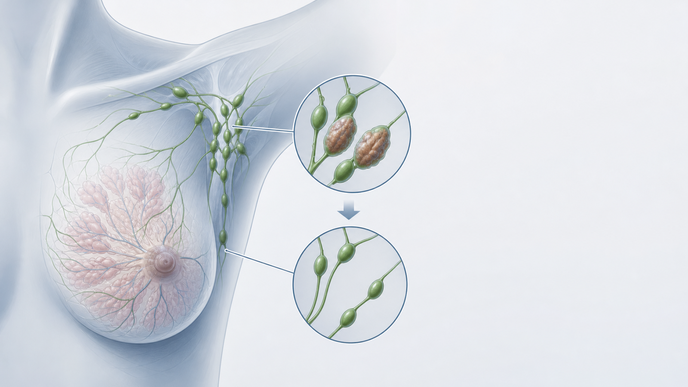
At surgery, pathological complete nodal response was 76.7% with pembrolizumab plus chemotherapy and 69.9% with placebo plus chemotherapy. Within 30 days after surgery, procedural pain was the only adverse event occurring in at least 5% of participants, at 7.0% and 5.8%, respectively. No other postoperative adverse event reached that threshold. Procedure selection and timing were similar between groups, while postsurgical nodal response differed. Investigators concluded that adding neoadjuvant pembrolizumab to chemotherapy did not adversely affect surgical outcomes, including type, timing, and safety.