
Transcript
Announcer:
Welcome to Project Oncology on ReachMD. This non-certified educational program is sponsored by Bristol-Myers Squibb and is produced and controlled by ReachMD. And now, here’s your host, Dr. Steve Jackson.
Dr. Jackson:
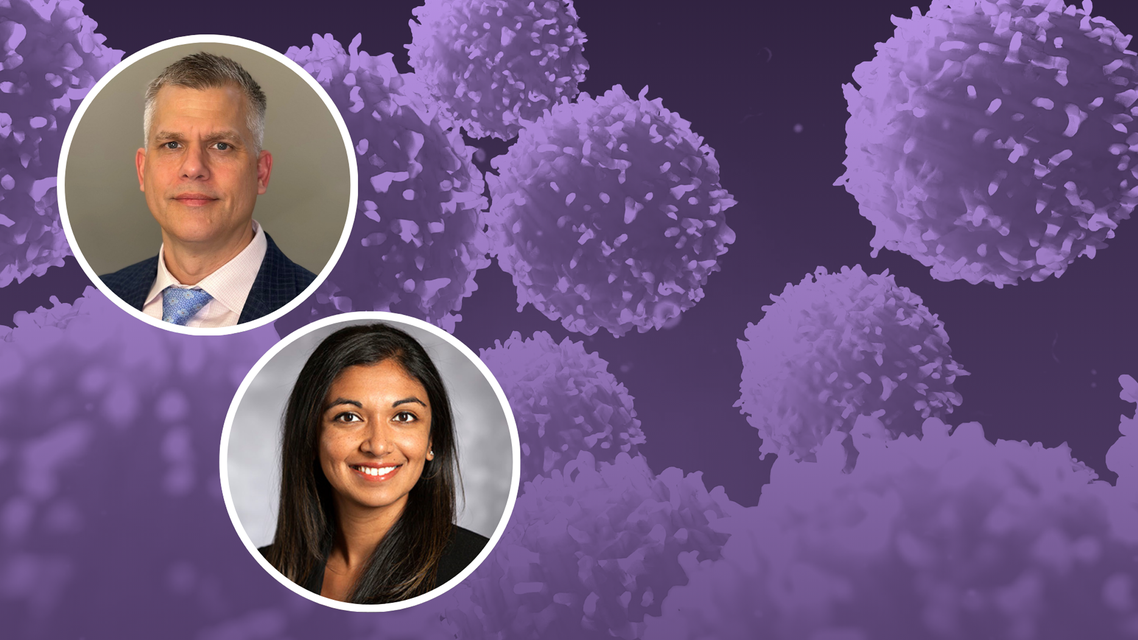
You're listening to Project Oncology on ReachMD. I'm Dr. Steve Jackson, and joining me to discuss treatment decisions after the use of BCMA-directed therapy in relapsed and refractory multiple myeloma is Dr. Nisha Joseph. She's an Associate Professor in the Department of Hematology and Medical Oncology at Emory University School of Medicine in Atlanta.
Dr. Joseph, thanks for being here today.
Dr. Joseph:
Thanks so much for having me.
Dr. Jackson:
So let's start with the big picture, Dr. Joseph. How do you define relapse after BCMA-directed therapy, and what sets this stage apart from earlier relapses?
Dr. Joseph:
I think that's a great place to start. When we think about the post-BCMA space, I think historically—although that was the recent past—post-BCMA relapse tended to be late relapse as CAR T-cell therapies that targeted BCMA were only approved in late line after four prior lines of therapy. That has now changed, and both cilta-cel and ide-cel are available now in earlier relapse. And then we have BCMA bispecific antibodies, and those are currently still approved for late relapse, four-plus lines of therapy. And now we also have belantamab mafodotin, which is a BCMA antibody-drug conjugate that's approved in combination and after two prior lines of therapy. So it's across the board now. We have access to BCMA-directed therapies earlier. Now, teclistamab, which is a BCMA-directed bispecific antibody, has been approved in early use in combination with daratumumab.
But in general, when we think about BCMA, we're thinking about a late relapse population. Those are usually patients who have had multiple lines of therapy or at least are exposed to many classes of drugs. And so after they have received the BCMA-directed therapy and then are refractory and have relapsed with BCMA-directed therapy, they tend to be in a treatment space where there's less defined treatment options and certainly less options in general. So it can be a tricky space to be in. Not to mention, they often have more T-cell dysfunction and dysregulation and more immune dysfunction. So that's what makes them a little bit different. And we're learning more and more as we have more therapies in this space, and as we're combining them and using them earlier, we're trying to figure out how to best sequence them. And in the post-BCMA space, what really is the best approach? That's the active clinical trial investigation that's happening now.
Dr. Jackson:
What changes do you see in disease biology and immune function after the use of BCMA-directed therapies, and how do those changes contribute to resistance?
Dr. Joseph:
What's really interesting now about when we use T-cell redirecting therapies is how different the immune system is after those drugs are utilized in a patient. So we're seeing more T-cell exhaustion as we're having ongoing T-cell stimulation with these drugs. We have changes in the bone marrow microenvironment and the immune microenvironment. Also, post-BCMA, when we think about this concept of clonal evolution, we see BCMA loss, downregulation of BCMA expression, and particularly after BCMA bispecific antibodies, BCMA mutation.
So you have to think a lot about. We have recycled BCMA-directed therapies, but you have to be very thoughtful about how to do that. So after someone has relapsed post-BCMA, there's multiple different scenarios in that instance and when you can reuse BCMA. So what I mean by that is if you use BCMA CAR T-cell therapy first—and in clinical trials, this has been demonstrated—on average, patients get longer remissions with a BCMA CAR T-cell directed therapy than at least a BCMA bispecific monotherapy. And so what we've seen is when you sequence these drugs, if there's at least six to nine months between these therapies, you have a better chance of getting a good response from that second BCMA-directed therapy. And so for this reason, it tends to be a better sequence to go from BCMA-directed CAR T-cell therapy to a BCMA bispecific antibody. We tend to see better responses.
If you reverse that and you go straight from a BCMA-directed bispecific antibody into a CAR T-cell therapy, we don't often see good results from that second therapy and, in this case, the CAR T-cell therapy. Often because you have T-cell exhaustion or T-cell dysfunction, you likely have a BCMA mutation or at least BCMA downregulation. That sequence is really not as helpful, and that might be a situation where we might think about an antigen class switch. We're thinking about doing something that targets GPRC5D or a different class of drugs altogether. So it's a really important piece when you're thinking about using BCMA: when that patient is relapsing, what environment are you stepping into when you think about that next line of therapy?
Dr. Jackson:
Now, currently, there aren't any clear consensus guidelines for treating these patients. So how are you approaching treatment selection and sequencing?
Dr. Joseph:
So in general, because I'm at an academic center and I'm a clinical trialist, I'm always thinking about a clinical trial, whether that’s post-BCMA or pre-BCMA, because even with our BCMA-directed therapies, there's a lot of ongoing clinical trial investigation looking at those in combination and in earlier lines, even in the newly diagnosed setting.
But as far as standard of care post-BCMA, I talked a little bit just now about sequencing of CAR T-cell therapy and bispecifics. So if someone is coming off a CAR T-cell therapy who had a nice long remission, and I think they're a good candidate for a bispecific, I might think of doing a BCMA bispecific in that instance.
If someone's coming off of a BCMA CAR and maybe they had a suboptimal response, or I know that they have a BCMA mutation or decreased expression, there are tests now that we're doing on the bone marrow to get that information, and then that's a really good opportunity for a class switch. So that might be something where I think about a GPRC5D targeted bispecific antibody like talquetamab. There's also ongoing clinical trial investigation looking at GPRC5D-directed CAR T-cell therapies. There's one called arlo-cel, which is being investigated in late relapse as well as early relapse settings. There's also GPRC5D-directed antibody-drug conjugates, so that's another clinical trial option I might think about. And then there's also a FcRH5-directed bispecific antibody called cevostamab that's currently still in clinical trial, but I think that's another reasonable thing to think about.
So in general, I'm thinking about time between therapies and if I want to re-expose to BCMA. Otherwise, I'm thinking about a class switch. And I want to think about the patient, of course, the disease factors, and their comorbidities, but also their support. Support and logistics are really important when you're thinking about T-cell redirecting therapies in general, and particularly for us at an academic center, a lot of our patients do not live in the Atlanta area. Some of these drugs—particularly the bispecifics that require a ramp-up and require a caregiver to monitor for neurotoxicity, and then, of course, CAR T-cell therapy that requires a lot more time at the center—we have to think about that. Does the patient have reliable transportation? Are they able to stay in the Atlanta area? How do we make that feasible? Do they have a caregiver? What are some of their other comorbidities? Will they be able to tolerate the increased infection risk?
So it is challenging. I think it's getting easier as we learn more and more about these therapies, but as in anything in myeloma, things continue to evolve so quickly. So we're trying to keep up with how rapidly the field is moving as these drugs are moving early and earlier. How do we best sequence and utilize these therapies, not only to be effective, but to be safe long term for our patients?
Dr. Jackson:
For those just joining us, this is Project Oncology on ReachMD. I'm Dr. Steve Jackson, and I'm speaking with Dr. Nisha Joseph about treatment decisions in patients with relapsed and refractory multiple myeloma who have already received BCMA-directed therapy.
Dr. Joseph, if we bring all these considerations into real-world practice, what clinical challenges most often shape your treatment decisions for these patients, and how do you navigate them?
Dr. Joseph:
When you first start a bispecific or a CAR T, you're thinking about cytokine release syndrome and neurotoxicity. But in the long term, what you have to manage with these patients can be prolonged cytopenias as well as infection risk. That's the main thing we think about, particularly for bispecific antibodies.
An important piece of that puzzle is ensuring that patients are getting monthly IVIG. So we use IVIG at our center for all bispecific patients monthly, regardless of IgG level or any prior infection history. And we even continue that for a few months after the bispecific stops because we know that immune dysregulation continues for a few months even after stopping the drug.
And we also think it's really important for all patients to be on PJP prophylaxis throughout their course. So those are really important things to think about when delivering these therapies. And when we're thinking about how that affects the actual patient, often because we're using these drugs in later lines, I think a bispecific monotherapy, for example, can be a really approachable therapy, particularly for a frail older patient because they're just coming in once a month. You still have to think, for that patient, is that something where they can tolerate the increased infection risk? What kind of comorbidities do they have? What kind of support do they have to make sure that we're not missing something when they're at home? So there's a lot of things to think about, but there's a very different set of criteria that we think about for a bispecific versus a CAR T-cell therapy.
Dr. Jackson:
And with all of those challenges in mind—you did touch on this before—where do clinical trials fit into your strategy, and how early should we be thinking about referral?
Dr. Joseph:
We're so fortunate here in Atlanta to have really great relationships with community oncologists across the state. I have so many of their phone numbers, and it's been really helpful, particularly when we have folks on clinical trial.
We're thinking about some of these more novel therapies that the community is starting to incorporate more and more into their routine practice. I feel that earlier is better for referral. I think even referring a myeloma patient at the newly diagnosed setting is important, and that's what we really try to do here at our center because then we're plugged into the patient's care from the beginning. And then every time they relapse, we can be part of that decision and talk about clinical trial options or standard of care. We recognize that not everyone is open to clinical trial options, but at least we can have that discussion.
And I think because things move so rapidly in myeloma, if you have access to an academic center, take advantage of that. Because things move so quickly, it's hard to keep up with all the new drugs and all the new guidelines on how to deliver these drugs safely and in what sequence. So I think earlier referral is absolutely better, and then we can think about these strategies at each relapse time point.
We're using BCMA-directed therapies, GPRC5D-directed therapies, and T-cell redirecting therapies in general as well as novel classes of agents, so things like CELMoDs or cemsidomide, which you can think of as an enhanced IMiD. There's also P300 inhibitors, which are novel small molecule inhibitors that we have in clinical trial development. So they're really interesting and effective classes of drugs that work post T-cell redirecting therapy because they don't require functional T cells to be effective.
So we have all these different options in clinical trial, and they're moving earlier and earlier in the course. We even have access to CAR T-cell therapies and bispecific antibodies in newly diagnosed, transplant eligible and ineligible, and even smoldering myeloma and precursor states. There are several ongoing clinical trials looking at bispecific antibodies in smoldering myeloma.
So it can never be too early to refer your patient if they're willing and able to come, just at least to have that discussion so that we ensure that they know their options and that we're making sure that eligible patients get early access to these therapies when they can.
Dr. Jackson:
And finally, Dr. Joseph, given the complexity of this stage, how do you coordinate care across teams while also prioritizing patient goals?
Dr. Joseph:
I think it's really important for myeloma therapy in general, but particularly when we're using some of these novel therapies, to have a good team. And we at Emory are very fortunate to have a dedicated myeloma pharmacist who has been integral in allowing us to deliver these therapies safely and effectively to develop protocols to start to do these bispecific ramp-ups and even CAR T-cell therapy fully outpatient. Pharmacists are a very key component of this.
We also work very closely with our cellular therapy team. Here at Emory, heme and cell therapy are one, but that's a very important collaboration as well. And we work very closely with who we call transplant ID; we have a team in infectious disease that specifically focuses on patients with hematologic malignancies. So that's a really important collaboration as well, particularly for patients chronically on bispecifics or who have been treated with bispecifics or CAR T-cell therapies who then develop atypical infections down the road. So that's a really helpful collaboration.
We also work very closely with palliative care as well, not necessarily for end of life, but just to help with anxiety, pain, and other things that patients who are in the late-relapse stage tend to need assistance with. So all of those people as well as, I should mention, of course, our excellent nursing care, our mid-level support, and our advanced practice providers. We also have something called an intermediate care center, which is essentially day hospital for these folks if they do develop CRS or ICANS. So we need all components of that team to deliver these therapies safely.
Dr. Jackson:
And those are all great points for us to consider as we come to the end of today's program. I want to thank my guest, Dr. Nisha Joseph, for helping us to better understand how we can make treatment decisions for patients who've received BCMA-directed therapy for relapsed and refractory multiple myeloma.
Dr. Joseph, it was great having you on the program.
Dr. Joseph:
Thank you so much. It was great to be here.
Announcer:
This episode of Project Oncology was sponsored by Bristol-Myers Squibb. To access this and other episodes in our series, visit Project Oncology on ReachMD.com, where you can Be Part of the Knowledge. Thanks for listening!