
Transcript
Announcer:
You’re listening to GLC on ReachMD. This activity is provided by Global Learning Collaborativeand is part of our MinuteCE curriculum.
Prior to beginning the activity, please be sure to review the faculty and commercial support disclosure statements as well as the learning objectives.
Dr. Silvestri:
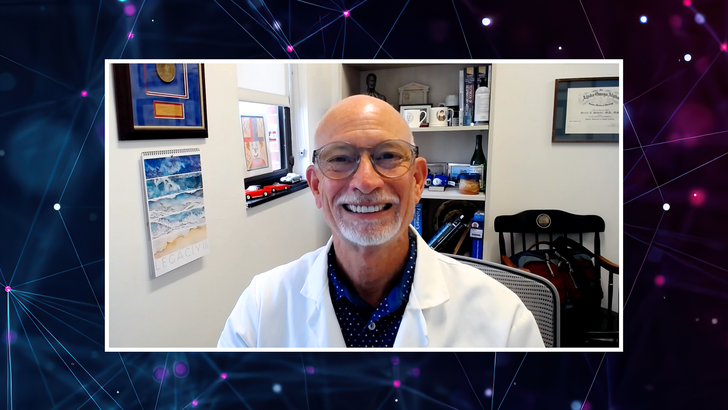
Welcome. This is Continuing Education with GLC. I'm Dr. Gerard Silvestri. I’m a pulmonologist at the Medical University of South Carolina. Today I’m breaking down biopsy approaches and molecular testing in advanced non-small cell lung cancer.
A pulmonologist is incredibly central to the role of testing and biomarker testing, which has become critically important in getting your patients the right treatment for lung cancer. I view us pulmonologists as the point guard on a basketball team. We see the patients first. We appropriately stage them and diagnose them for their cancer, and then deliver them to the appropriate care team, whether that be surgery, oncology, many times now surgery and oncology, radiation therapy, etc.
To do that, though, to understand how important staging is, we have to do a better job of getting tissue for that staging. Almost all that tissue is done with biomarker testing through endobronchial ultrasound with fine needle aspiration. In the past, pulmonologists have needed only to take 3 passes into a lymph node to get an adequate C4 lung cancer. That's the diagnosis of lung cancer. Unfortunately, that's not enough tissue to get us all that we need in terms of biomarker testing. And so we now recommend 6 passes with EBUS to get enough specimen for comprehensive profiling.
And we think that comprehensive profiling is probably better than single gene profiling. What does that mean? Well, you can have a panel of 50 genes, whether you do that in house or whether you send it out to a company to have it tested. But it's better than single gene. You want to pick up as many of these mutations as you can, and there are so many of them now, including KRAS G12C, which have FDA-approved drugs to make sure that you get them the right therapy by the time they meet their oncologist.
Unfortunately, we in our lab have found that the longest time it takes to get the specimens back, which can be up to 30, even up to 40 days before the mutational testing gets back to the oncologist, is the time when the biopsy is taken, which is by us, and the time that the order is written, which can be up to 14 days, an average of 14 days—2 weeks before the order is even written—to do the biomarker testing.
So for me, for our pulmonary community, I think it's incredibly important to understand the specimen triage, the timing, and what happens after it leaves your hands. And so for me, it's about communication. I want my pulmonologists in the pulmonary community communicate with the pathologist and the oncologist so that we know what testing should be done, how the specimen should be handled, and how quickly an order can be written to have that, once it's known that it's a non-small cell lung cancer, that biomarker testing can occur. We feel very strongly that it should be reflex tests at the time that the specimen leaves your hands and gets down to the pathology department. Again, that just requires some communication. Who writes that order? That once the pathologist says, "Oh, yes, this is non-small cell lung cancer,” it triggers the order to do biomarker testing, whether it's done in house or out of house.
And then the last part of this is whether you can do plasma testing, so liquid biopsies, and those biopsies can be very good. The liquid biopsy can identify mutations, but it is not as sensitive as tissue. So we use liquid biopsy when the tissue is not enough to be tested, or it becomes not a quantity sufficient for testing, or the tumor is just too broken down to have that tested. So we are now holding a blood specimen until the tissue is adequately tested, and a lot of places are actually doing both simultaneously at the outset. Again, if it's positive on the liquid biopsy, if your mutation is positive, that's great. If it's negative, you really need to confirm that with tissue.
So that's really it for today. That's all the time I have, and I want to thank you for listening.
Announcer:
You have been listening to GLC on ReachMD. This activity is provided by Global Learning Collaborativeand is part of our MinuteCE curriculum.
To receive your free CE credit, or to download this activity, go to ReachMD.com/CME. Thank you for listening.
 In support of improving patient care, Global Learning Collaborative (GLC) is jointly accredited by the Accreditation Council for Continuing Medical Education (ACCME), the Accreditation Council for Pharmacy Education (ACPE), and the American Nurses Credentialing Center (ANCC) to provide continuing education for the healthcare team.

 Global Learning Collaborative (GLC) designates this activity for a maximum of 0.75 contact hour(s) (0.075 CEUs) of pharmacy continuing education credit.

